

TLC2274CD Precision Quad Operational Amplifier
49 people are viewing this right now
In Stock
SKU
191888043025
£5.50
Safe Checkout, Guaranteed

Safe Checkout, Guaranteed
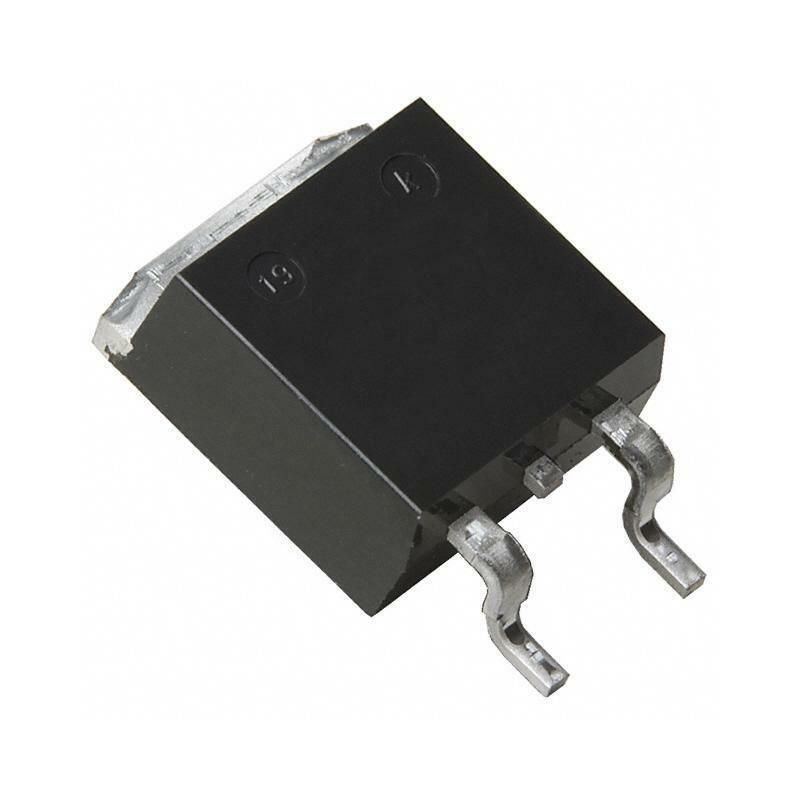
The TLC2274CD is a precision quad operational amplifier offered in a convenient SMD (Surface Mount Device) package, designed for a wide array of analog signal processing applications. This integrated circuit provides four independent, high-performance op-amps within a single chip, making it an excellent choice for space-constrained designs. Its superior input characteristics, including low input offset voltage and low input bias current, ensure accurate and reliable amplification of weak signals. The TLC2274CD's rail-to-rail input and output swing allows for maximum dynamic range and efficient use of the power supply voltage, maximizing the signal-to-noise ratio. This feature is particularly useful in battery-powered applications where maximizing battery life is critical. The SMD package of the TLC2274CD facilitates automated assembly, resulting in increased production efficiency and reduced manufacturing costs.
It is ideal for applications requiring high density and miniaturization. This quad op-amp is suitable for use in instrumentation amplifiers, active filters, data acquisition systems, and sensor signal conditioning circuits. The high gain-bandwidth product of the TLC2274CD ensures excellent performance at higher frequencies, making it suitable for audio and video applications. The low noise characteristics of this IC contribute to improved signal clarity and reduced distortion. This integrated circuit is designed for ease of use, with straightforward implementation and widely available documentation. The TLC2274CD is a valuable component for signal conditioning, buffering, and amplification in a variety of electronic systems.
Its low power consumption minimizes heat dissipation and extends battery life in portable devices. Its high-performance characteristics and compact size make it an indispensable tool for design engineers and hobbyists alike. Whether you are designing precision instrumentation, audio preamplifiers, or general-purpose analog circuits, the TLC2274CD offers a reliable and versatile solution. The robust design and high-quality manufacturing standards ensure long-term reliability and stable operation. Explore the potential of your analog designs with the TLC2274CD. Its versatile architecture makes it a great fit for a variety of operational amplifier circuits.
Order your TLC2274CD SMD integrated circuit now and experience the difference in performance and reliability. Start your next electronics project today!
| Product Name | TLC2274CD Precision Quad Operational Amplifier |
|---|---|
| SKU | 191888043025 |
| Price | £5.50 |
| TLC2274CD Precision Quad Operational Amplifier Color | As per image |
| Category | Integrated Circuits |
| Brand | Nikko Electronics ltd |
| Product Code | 191888043025 |
| Availability | Yes |
Shipping cost is based on order value. Just add products to your cart and use the Shipping Calculator to see the shipping price. We want you to be 100% satisfied with your purchase. Items can be returned or exchanged within 30 days of delivery.
The TLC2274CD Precision Quad Operational Amplifier is exceptionally well-suited for high-precision measurement and instrumentation applications that demand accuracy and minimal signal distortion. Its superior input characteristics, specifically low input offset voltage and low input bias current, make it ideal for amplifying weak signals from sensors without introducing significant error. This includes critical applications such as medical diagnostic equipment, where precise signal conditioning of bio-signals is paramount, or in industrial process control systems for accurate temperature, pressure, or flow measurements. Data acquisition front-ends, precision voltage references, and active filters in test and measurement equipment also greatly benefit from the TLC2274CD's stability and accuracy, ensuring reliable and repeatable results even when dealing with high-impedance sources or differential signals. Its performance ensures that the integrity of the original signal is maintained, which is crucial for sensitive analytical instruments.
The rail-to-rail input and output swing of the TLC2274CD Precision Quad Operational Amplifier is a significant advantage for battery-powered designs, directly contributing to extended battery life and enhanced performance. This feature allows the op-amp to operate effectively even when the input signals approach the positive or negative supply rails, and its output can swing very close to these rails. This maximizes the available dynamic range, ensuring that every millivolt of the limited battery voltage is utilized efficiently, thereby improving the signal-to-noise ratio. For designers, this means less power wasted in headroom and a simpler power supply design, often enabling single-supply operation. The TLC2274CD typically operates optimally across a wide supply voltage range, from a single supply of 4.4V up to 16V, or dual supplies of ±2.2V to ±8V, making it versatile for various low-power and portable applications without compromising signal integrity.
Beyond merely being an SMD package, the quad configuration of the TLC2274CD Precision Quad Operational Amplifier significantly enhances board layout efficiency and system miniaturization in space-constrained designs. By integrating four independent, high-performance op-amps into a single chip, it dramatically reduces the overall component count compared to using four discrete single op-amps. This consolidation saves valuable PCB real estate, simplifies routing, and minimizes the number of solder joints, which in turn improves reliability and reduces manufacturing complexity. Furthermore, having multiple op-amps within one package can lead to better thermal tracking and matching of characteristics across the four channels, an advantage in applications requiring multiple, closely matched amplification stages. This integrated approach allows designers to create more compact, dense, and efficient analog front-ends, critical for portable devices, wearable technology, and multi-channel sensor systems where every millimeter of board space is at a premium.
To fully leverage the impressive noise performance and maximize the signal-to-noise ratio (SNR) of the TLC2274CD Precision Quad Operational Amplifier, especially for weak signal amplification, several critical design considerations must be observed. Proper power supply decoupling is essential; placing bypass capacitors (e.g., 0.1µF ceramic in parallel with 10µF electrolytic) as close as possible to the supply pins minimizes power supply noise coupling into the op-amp. Grounding techniques are also vital; using a solid ground plane and minimizing ground loops helps prevent noise injection. Input impedance matching with the signal source, careful selection of external resistors (using low-noise types), and limiting the signal bandwidth to only what is necessary can significantly reduce broadband noise. Additionally, shielding sensitive input traces from external electromagnetic interference (EMI) and designing for minimal parasitic capacitance will ensure that the intrinsic low noise characteristics of the TLC2274CD are not compromised by external factors, allowing for accurate amplification of very small signals.
Absolutely, the TLC2274CD Precision Quad Operational Amplifier's low input bias current and low input offset voltage are precisely the characteristics that enable it to directly and effectively interface with high-impedance sensors or transducers without significant signal degradation. High-impedance sources, such as pH electrodes, photodiodes, piezoelectric sensors, or electret microphones, produce very small currents or voltages and are easily loaded by op-amps with higher input bias currents, leading to voltage drops and measurement errors. The TLC2274CD's minimal input bias current ensures that the op-amp draws negligible current from the sensor, preserving the signal integrity and preventing voltage drops across the sensor's internal impedance. Similarly, the low input offset voltage minimizes DC errors at the output, allowing for accurate amplification of the sensor's true signal. This makes the TLC2274CD an excellent choice for a wide range of precision sensor interfacing applications where maintaining signal fidelity from delicate sources is paramount.
Beyond general analog signal processing, the TLC2274CD Precision Quad Operational Amplifier's robust features offer distinct advantages in several advanced configurations. For active filtering, its precision and low noise make it ideal for multi-pole Butterworth, Bessel, or Chebyshev filters in data acquisition systems or audio applications, ensuring sharp roll-offs and accurate frequency response. Its rail-to-rail output is highly beneficial for buffering in single-supply systems, ensuring full signal swing without clipping, which is crucial for driving ADCs or long cables. In active rectification, the low input offset voltage allows for precision rectifiers that can accurately process very low-level AC signals, overcoming the diode drop limitations of passive rectifiers. Furthermore, the TLC2274CD excels in current-to-voltage converters for photodiode applications, instrumentation amplifiers for differential sensing, and voltage-controlled oscillators (VCOs) or waveform generators, where its stability and multiple independent channels enable complex circuit designs with fewer discrete components and improved performance.
For optimal performance and manufacturing reliability when integrating the TLC2274CD Precision Quad Operational Amplifier in its SMD package, adherence to recommended soldering profiles and board layout practices is crucial. For reflow soldering, follow the JEDEC J-STD-020 standard, specifically tailoring the peak temperature and dwell time to the specific package type (e.g., SOIC, TSSOP) and solder paste used, typically around 245-260°C for lead-free solder. Avoid excessive thermal stress. In terms of board layout, proper thermal management is essential; ensure adequate copper pour or thermal vias if high power dissipation is expected, though op-amps generally dissipate less. Crucially, minimize trace lengths for sensitive input and output signals to reduce parasitic capacitance and inductance, which can degrade high-frequency performance and introduce noise. Implement robust power supply decoupling with ceramic capacitors placed immediately adjacent to the VCC/GND pins. A solid ground plane beneath the TLC2274CD is highly recommended to provide a stable reference and minimize noise, ensuring the precision capabilities of the operational amplifier are fully realized.