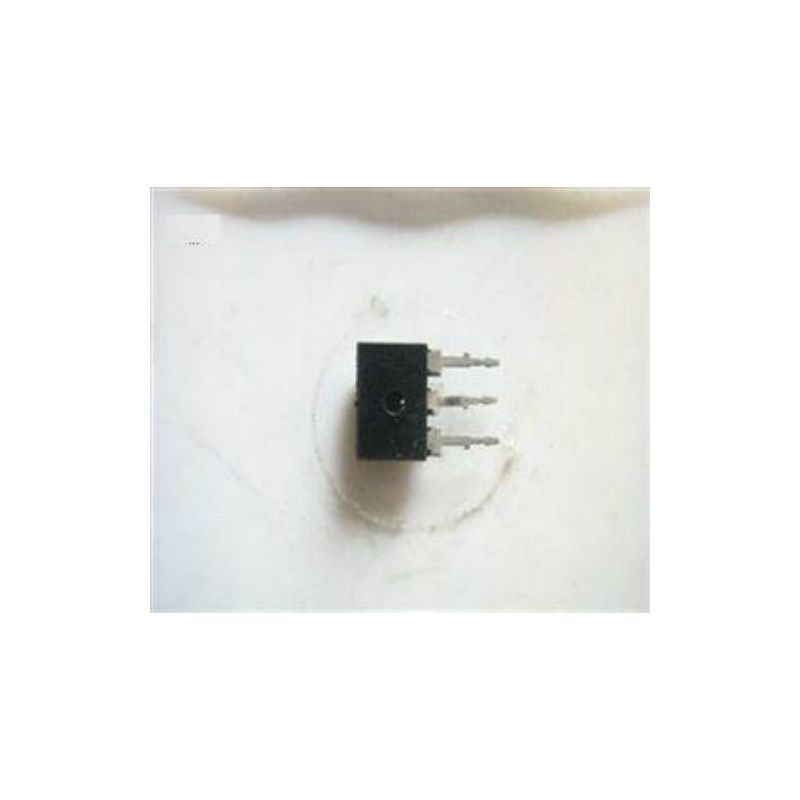


UTC2025 Dual Audio Power Amplifier IC (DIP-16)
38 people are viewing this right now
In Stock
SKU
191692561375
£8.99
Safe Checkout, Guaranteed

Safe Checkout, Guaranteed
Amplify your audio experiences with the UTC2025 Integrated Circuit, a versatile audio power amplifier IC housed in a DIP-16 (Dual In-Line Package with 16 pins). This IC is designed to deliver clear and powerful audio amplification, making it a great choice for portable audio players, small stereo systems, and various DIY audio projects. Its ease of use and reliable performance make it a valuable addition to any electronics enthusiast's toolkit. The UTC2025 IC is known for its low distortion and good signal-to-noise ratio, ensuring a pleasant listening experience. Its design is robust and provides stable operation even when dealing with fluctuating power inputs. The DIP-16 package is breadboard-friendly and easy to integrate into a wide range of PCB designs.
Whether you're building a simple headphone amplifier, upgrading an existing audio system, or experimenting with audio circuits, the UTC2025 offers the features you need. This integrated circuit is commonly used in applications where simple, efficient, and affordable audio amplification is required. Its ability to power small speakers makes it ideal for portable devices and desktop audio setups. Built with quality components, the UTC2025 has undergone testing to ensure that it functions according to specifications. The DIP-16 package allows it to easily integrate into existing circuits. Using the UTC2025 IC leads to improved sound quality, lower noise, and more reliable performance.
These advantages are particularly beneficial when working with sensitive audio equipment or trying to maximize the potential of your audio projects. This IC shines in scenarios where a small yet capable audio amplifier is required. Its high efficiency means that it doesn't generate too much heat, allowing you to easily integrate it into smaller projects. By selecting the UTC2025, you're investing in an amplifier chip that's designed for reliability and ease of integration. Purchase your UTC2025 DIP-16 IC today and see what a difference quality makes. Make the right choice with dependable audio amplification – the difference will be heard.
Your next audio project will benefit greatly with the enhanced reliability and performance offered by this chip. Get your UTC2025 today and take the first step toward a better audio experience. Don't wait. Add it to your cart and complete your purchase now for improved audio quality in your next project. Experience the difference today!
| Product Name | UTC2025 Dual Audio Power Amplifier IC (DIP-16) |
|---|---|
| SKU | 191692561375 |
| Price | £8.99 |
| UTC2025 Dual Audio Power Amplifier IC (DIP-16) Color | As per image |
| Category | Integrated Circuits |
| Brand | Nikko Electronics ltd |
| Product Code | 191692561375 |
| Availability | Yes |
Shipping cost is based on order value. Just add products to your cart and use the Shipping Calculator to see the shipping price. We want you to be 100% satisfied with your purchase. Items can be returned or exchanged within 30 days of delivery.
The UTC2025 Dual Audio Power Amplifier IC (DIP-16) is designed for high efficiency in low-voltage applications, typically operating within a supply voltage range of 3V to 15V. For most portable audio applications, a 9V supply is considered the 'sweet spot,' providing a balance between power output and thermal stability. When pushing the UTC2025 Dual Audio Power Amplifier IC (DIP-16) to its maximum 15V limit, it is crucial to ensure that the power supply is well-regulated and decoupled with a 100uF electrolytic capacitor paired with a 0.1uF ceramic capacitor close to the VCC pin (Pin 16). This prevents high-frequency oscillations and voltage spikes that could damage the internal circuitry. Operating the IC at lower voltages, such as 3V or 5V, will significantly reduce the output wattage but is ideal for battery-powered headphone amplifiers or small signal boosters where power consumption must be minimized. Always monitor the current draw during peak transients to ensure your power source can handle the dynamic requirements of audio playback.
The UTC2025 Dual Audio Power Amplifier IC (DIP-16) is highly versatile, allowing for both dual-channel stereo and single-channel mono (BTL) configurations. In a standard stereo setup, the IC delivers approximately 2.3W per channel into 4-ohm speakers at a 9V supply. However, if your project requires more punch, you can bridge the two internal amplifiers to drive a single speaker. In BTL mode, the UTC2025 Dual Audio Power Amplifier IC (DIP-16) can deliver nearly double the power (up to 4.7W) into an 8-ohm load. To achieve this, the input signal is fed to one channel while the other channel receives an inverted signal, and the speaker is connected across the two output pins (Pins 2 and 15) rather than to ground. This configuration eliminates the need for large output coupling capacitors, which improves the low-frequency response. When designing a PCB for the UTC2025 Dual Audio Power Amplifier IC (DIP-16), ensure your layout accounts for the different feedback loops required for BTL operation to maintain signal phase integrity.
Thermal dissipation is a critical factor when working with the UTC2025 Dual Audio Power Amplifier IC (DIP-16), especially when driving low-impedance loads at maximum volume. The DIP-16 package utilizes its middle pins (Pins 4, 5, 12, and 13) as the primary heat transfer path to the PCB. These pins are internally connected to the lead frame and should be soldered to a large copper ground plane to act as a heat sink. If you are integrating the UTC2025 Dual Audio Power Amplifier IC (DIP-16) into a compact enclosure with limited airflow, consider using a small clip-on DIP heatsink or increasing the copper weight on your PCB traces. The IC features internal thermal shutdown protection, which will mute the output if the junction temperature exceeds safe limits (typically around 150°C). To ensure long-term reliability of the UTC2025 Dual Audio Power Amplifier IC (DIP-16), it is best practice to keep the operating temperature well below this threshold by optimizing the thermal coupling between the IC pins and the surrounding circuit board environment.
To achieve the low distortion and high signal-to-noise ratio promised by the UTC2025 Dual Audio Power Amplifier IC (DIP-16), component selection is vital. The bootstrap capacitors (typically 100uF) connected to Pins 3 and 14 are essential for maintaining the maximum output voltage swing; using low-ESR capacitors here will improve audio clarity. Additionally, the feedback capacitors (connected to Pins 6 and 11) dictate the lower cut-off frequency and the overall gain stability of the UTC2025 Dual Audio Power Amplifier IC (DIP-16). For the output coupling capacitors (Pins 2 and 15), values between 470uF and 1000uF are recommended to ensure a full-bodied bass response when driving 4-ohm or 8-ohm speakers. To minimize EMI and high-frequency hiss, place a 0.1uF bypass capacitor as close as possible to the supply pins. Using high-quality metal film resistors in the input stage will further reduce thermal noise, ensuring that the UTC2025 Dual Audio Power Amplifier IC (DIP-16) provides a clean, hi-fi listening experience for your DIY audio projects.
Yes, the UTC2025 Dual Audio Power Amplifier IC (DIP-16) is functionally equivalent and pin-to-pin compatible with the industry-standard TEA2025. This makes it an excellent drop-in replacement for repairing vintage computer speakers, portable radios, or arcade game audio boards that originally used the TEA2025. The electrical characteristics, including the internal gain of approximately 45dB and the input sensitivity, are virtually identical between the two. When performing a replacement, ensure that the existing PCB footprint matches the DIP-16 layout and that the surrounding passive components (capacitors and resistors) are still within their rated tolerances. Because the UTC2025 Dual Audio Power Amplifier IC (DIP-16) is manufactured using modern semiconductor processes, it often exhibits slightly better thermal efficiency and lower noise floors than older batches of equivalent ICs. Always verify the supply voltage of the original circuit to confirm it falls within the 3V-15V operating range of the UTC2025 Dual Audio Power Amplifier IC (DIP-16) before installation.
The UTC2025 Dual Audio Power Amplifier IC (DIP-16) features a typical input impedance of approximately 30kΩ. This relatively high impedance allows it to be easily driven by most common audio sources, such as smartphones, Bluetooth modules, and DACs, without the need for an additional pre-amplifier stage. However, to prevent DC offset issues and protect the input stage, it is mandatory to use input coupling capacitors (usually 0.1uF to 1uF) at Pins 7 and 10. If you find the gain of the UTC2025 Dual Audio Power Amplifier IC (DIP-16) is too high for your specific source, causing clipping or saturation, you can implement a simple resistive voltage divider at the input to attenuate the signal. Proper grounding is also essential; ensure that the signal ground and power ground meet at a single star-point to prevent ground loops that could introduce audible hum into the UTC2025 Dual Audio Power Amplifier IC (DIP-16) amplification path.
If you experience 'popping' sounds during power-on/off with the UTC2025 Dual Audio Power Amplifier IC (DIP-16), it is often due to the rapid charging of the output coupling capacitors. This can be mitigated by adding a soft-start circuit or ensuring the supply voltage ramps up smoothly. High-frequency oscillation, characterized by the IC getting hot without an audio signal or producing a high-pitched squeal, is usually a result of poor PCB layout or missing decoupling capacitors. Ensure that the 0.1uF ceramic bypass capacitor is soldered directly across the VCC and GND pins of the UTC2025 Dual Audio Power Amplifier IC (DIP-16). Additionally, keep the input signal traces far away from the output traces to prevent parasitic feedback. If the UTC2025 Dual Audio Power Amplifier IC (DIP-16) sounds distorted at low volumes, check the health of your electrolytic capacitors, as dried-out caps are a common failure point in audio circuits. Ensuring a stable, clean power source is the first step in resolving most performance issues with this IC.