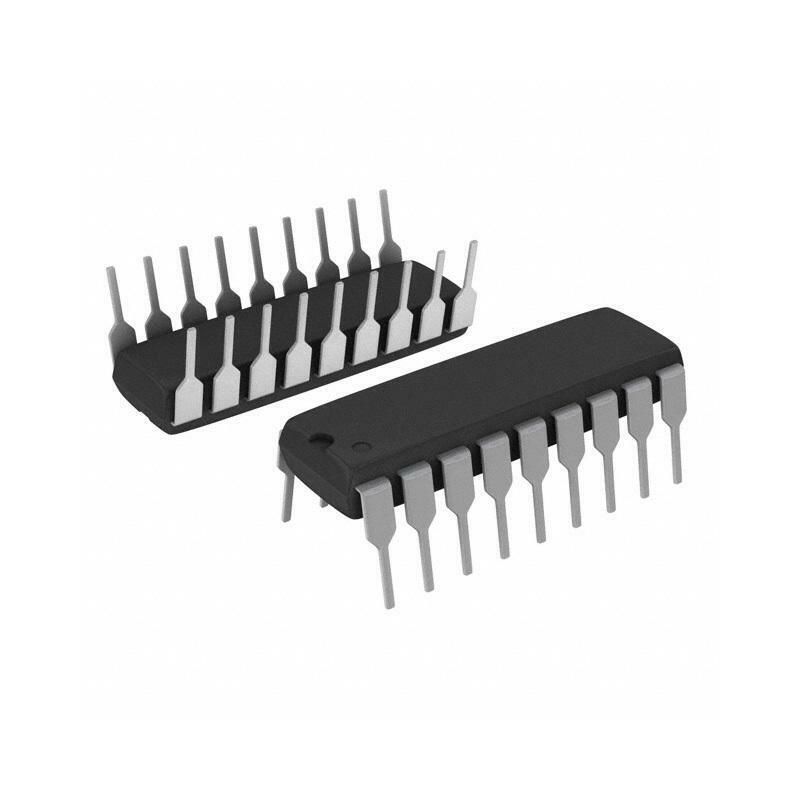


Xilinx XC5202-6PC84C FPGA Integrated Circuit
22 people are viewing this right now
In Stock
SKU
191890269418
£19.99
Safe Checkout, Guaranteed

Safe Checkout, Guaranteed
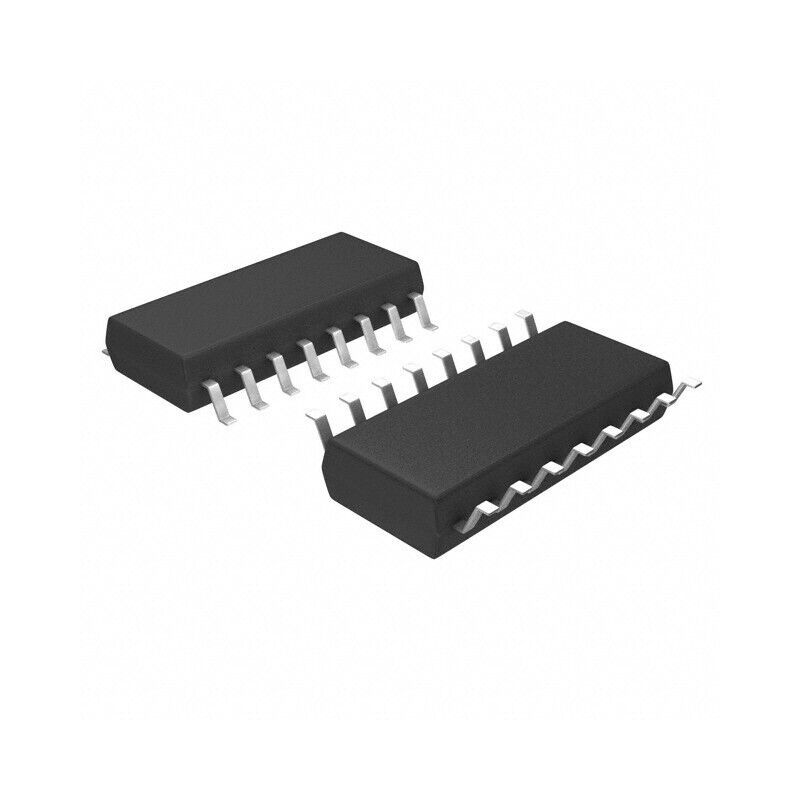
The XC5202-6PC84C, also represented as XC52026PC84C, is a Field-Programmable Gate Array (FPGA) integrated circuit manufactured by Xilinx. This FPGA belongs to the XC5200 series, known for its flexible architecture and suitability for a broad range of digital logic applications. Encased in an 84-pin Plastic Quad Flat Pack (PQFP) package, the XC5202-6PC84C provides a compact solution with sufficient I/O pins for various designs. This FPGA is a versatile component for prototyping, custom logic implementation, and accelerating computationally intensive tasks. Its programmability allows designers to implement and modify digital circuits without the need for custom silicon fabrication, significantly reducing development time and cost. The XC5202-6PC84C features a configurable logic block (CLB) architecture, allowing for flexible implementation of combinational and sequential logic functions.
Its programmable interconnect resources enable the creation of complex routing topologies to connect the CLBs. With the 6 speed grade designation, this device offers a balance between performance and power consumption. The 84-pin PQFP package provides a relatively small footprint while offering a large number of I/O pins for interfacing with external devices. The Xilinx XC5202 series is known for its mature design tools and comprehensive documentation, simplifying the development process. The XC5202-6PC84C is suitable for a wide range of applications, including digital signal processing (DSP), embedded systems, and custom logic controllers. Its programmability makes it ideal for implementing custom hardware accelerators and real-time processing systems.
The XC5202-6PC84C is also used in telecommunications equipment, industrial automation systems, and medical devices. Its flexibility allows it to be adapted to a variety of specific application requirements. The Xilinx ISE design suite provides a complete development environment for programming and configuring the XC5202-6PC84C. Its robust architecture and versatile features make it a reliable choice for demanding applications. The XC5202-6PC84C's ability to implement complex digital logic functions makes it a valuable tool for engineers and designers. Enhance your digital designs with the flexibility and performance of the XC5202-6PC84C FPGA.
Secure your XC5202-6PC84C Xilinx integrated circuit today and revolutionize your prototyping and custom logic implementation. Order now and unlock the full potential of your digital designs with this versatile FPGA. Transform your concepts into reality with the XC5202-6PC84C FPGA and experience the power of custom hardware.
| Product Name | Xilinx XC5202-6PC84C FPGA Integrated Circuit |
|---|---|
| SKU | 191890269418 |
| Price | £19.99 |
| Xilinx XC5202-6PC84C FPGA Integrated Circuit Color | As per image |
| Category | Integrated Circuits |
| Brand | Nikko Electronics ltd |
| Product Code | 191890269418 |
| Availability | Yes |
Shipping cost is based on order value. Just add products to your cart and use the Shipping Calculator to see the shipping price. We want you to be 100% satisfied with your purchase. Items can be returned or exchanged within 30 days of delivery.
The Xilinx XC5202-6PC84C FPGA Integrated Circuit, a member of the XC5200 series, is built around a flexible architecture designed for general-purpose digital logic implementation. Its core logic capabilities are derived from Configurable Logic Blocks (CLBs), which are the fundamental building blocks for user-defined logic. Each CLB in the XC5202-6PC84C typically contains multiple Look-Up Tables (LUTs) for combinatorial logic, along with flip-flops for synchronous sequential logic. This structure enables designers to implement a wide array of functions, from simple gates to complex state machines and arithmetic circuits. The interconnect resources within the Xilinx XC5202-6PC84C are robust, allowing for efficient routing between CLBs and I/O blocks, which is crucial for achieving desired performance and logic density. This programmability makes the Xilinx XC5202-6PC84C highly versatile for rapid prototyping and custom logic solutions, providing a solid foundation for various digital systems.
For designing with the Xilinx XC5202-6PC84C FPGA Integrated Circuit, the primary development environment is typically Xilinx ISE (Integrated Software Environment), specifically older versions compatible with the XC5200 series. While newer Xilinx FPGAs use Vivado, the XC5202-6PC84C predates this transition. Designers will utilize ISE for schematic capture or hardware description languages (HDLs) such as VHDL or Verilog to describe their digital circuits. The ISE suite provides tools for synthesis, place-and-route, timing analysis, and bitstream generation. For simulation, third-party simulators like ModelSim or ISim (integrated into ISE) are commonly used to verify the functional correctness and timing performance of the design before programming the actual Xilinx XC5202-6PC84C. Programming of the device is typically done via a JTAG (Joint Test Action Group) interface using a compatible Xilinx Platform Cable, which downloads the generated bitstream onto the FPGA.
The power consumption of the Xilinx XC5202-6PC84C FPGA Integrated Circuit is a critical consideration for system design, influenced by both static and dynamic factors. Static power consumption, primarily due to leakage currents, is relatively stable but increases with temperature. Dynamic power consumption, however, is highly dependent on the implemented design, clock frequency, logic utilization, and I/O toggling rates. Faster clock speeds, higher logic density, and frequent switching of I/O pins will lead to increased dynamic power dissipation. For the Xilinx XC5202-6PC84C, being an older generation FPGA, its power characteristics are generally less optimized than modern FPGAs, requiring careful power budgeting. Designers should use the power analysis tools within the Xilinx ISE software to estimate consumption based on their specific logic implementation and operating conditions, ensuring adequate power supply and thermal management for reliable operation of the Xilinx XC5202-6PC84C.
The Xilinx XC5202-6PC84C FPGA Integrated Circuit is housed in an 84-pin Plastic Quad Flat Pack (PQFP) package, which provides a compact solution with a sufficient number of user I/O pins for a wide range of digital designs. While the exact number of user I/Os will depend on the specific pinout (accounting for power, ground, and configuration pins), the PQFP package typically offers a good balance for moderate complexity. The I/O blocks of the Xilinx XC5202-6PC84C are generally configurable to support various single-ended interface standards, such as TTL (Transistor-Transistor Logic) and CMOS (Complementary Metal-Oxide-Semiconductor) logic levels. Depending on the specific device variant and available documentation, it may support 5V or 3.3V logic families. These programmable I/O capabilities make the Xilinx XC5202-6PC84C suitable for interfacing with a broad spectrum of external digital components and systems, facilitating versatile system integration.
For optimal performance and longevity, the Xilinx XC5202-6PC84C FPGA Integrated Circuit requires adherence to specific operating conditions. Typically, devices in the XC5200 series operate on a 5V core supply voltage, with some I/O banks potentially supporting 3.3V, though this should be verified with the datasheet for the specific part number. The operating temperature range is critical; commercial grade devices usually support 0°C to +70°C, while industrial grade variants extend this to -40°C to +85°C. The '-6' in 'XC5202-6PC84C' indicates a specific speed grade, which guarantees performance within these temperature and voltage limits. Exceeding these specifications can lead to unreliable operation, performance degradation, or permanent damage to the Xilinx XC5202-6PC84C. Designers must ensure proper thermal management, including heatsinking if necessary, to keep the junction temperature within the recommended range, especially in demanding applications.
The Xilinx XC5202-6PC84C FPGA Integrated Circuit, belonging to the XC5200 series, represents an older generation of Xilinx FPGAs. Compared to newer families like the 7 Series (Artix-7, Kintex-7, Virtex-7) or even Spartan-6, it offers significantly lower logic density, fewer dedicated hard IP blocks (like DSP slices or transceivers), and operates at lower maximum clock frequencies. However, for legacy designs, maintenance, or cost-sensitive projects that do not require cutting-edge performance or high gate counts, the Xilinx XC5202-6PC84C remains highly cost-effective and perfectly adequate. Its proven architecture and established design flow (Xilinx ISE) can be an advantage for engineers familiar with older tools. For applications where moderate logic complexity and moderate speed are sufficient, and where availability of a mature, reliable part is prioritized, the Xilinx XC5202-6PC84C FPGA Integrated Circuit continues to be a viable choice, often at a lower price point than more advanced, feature-rich FPGAs.
The Xilinx XC5202-6PC84C FPGA Integrated Circuit excels in a variety of digital logic applications where its flexible architecture and moderate complexity are a good fit. It is particularly well-suited for rapid prototyping, allowing designers to quickly implement and test custom digital circuits without the lengthy fabrication cycles of ASICs. Common application areas include custom glue logic, where it can integrate disparate components or adapt signal protocols; control systems, for implementing state machines and sequence controllers; and embedded systems, providing configurable logic for peripherals or specialized accelerators. Its programmability also makes the Xilinx XC5202-6PC84C valuable in educational and research environments for exploring digital design concepts. While not designed for high-end DSP or extremely high-speed data processing found in modern FPGAs, its robust and versatile nature makes the Xilinx XC5202-6PC84C an excellent choice for a broad range of digital logic tasks that benefit from its reconfigurability and cost-effectiveness.