

Z80A CPU 4MHz Microprocessor Z0844104PSC (DIP-40)
26 people are viewing this right now
In Stock
SKU
191883979375
£8.60
Safe Checkout, Guaranteed

Safe Checkout, Guaranteed
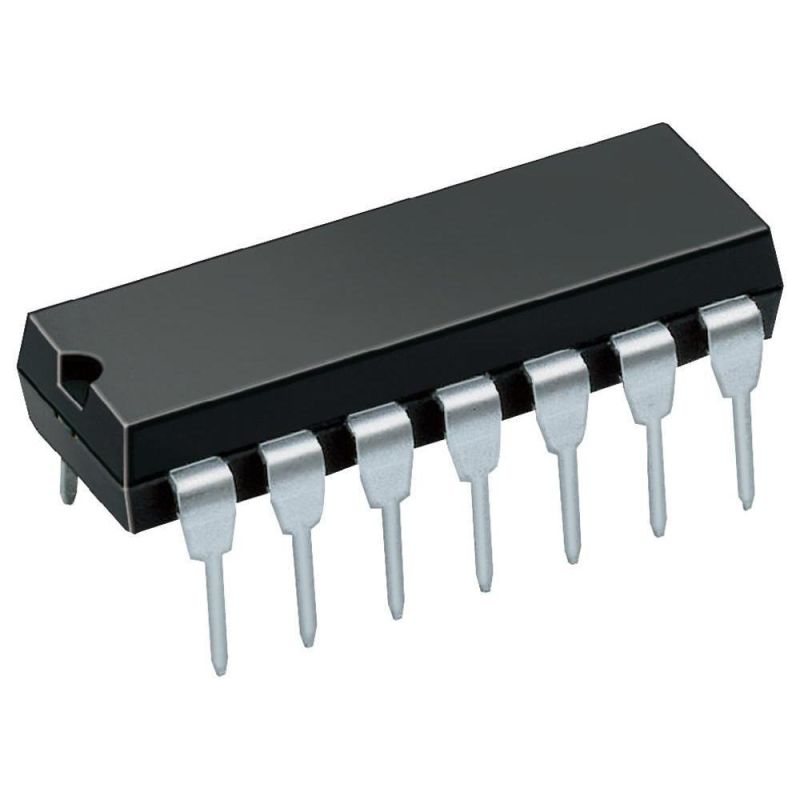
The Z0844104PSC is a classic and highly regarded integrated circuit (IC) housed in a DIP (Dual In-Line Package). It is a cornerstone component in numerous legacy systems and remains valuable for educational purposes and hobbyist projects. The Z0844104PSC is commonly recognized as a Z80 microprocessor, a pivotal CPU that powered a generation of microcomputers. This processor features an 8-bit data bus and a 16-bit address bus, enabling it to access 64KB of memory. The DIP package ensures ease of use on breadboards and through-hole PCBs, making it perfect for learning, prototyping, and retro computing applications. The Z80's instruction set, known for its versatility and efficiency, allows it to perform a wide variety of operations.
Its integrated interrupt handling and dynamic RAM refresh circuitry simplify system design. The Z0844104PSC operates at a specified clock frequency. Its performance depends on this frequency, and exceeding the limit can damage the processor. Understanding the Z80 architecture is crucial for effective use. Programming the Z80 typically involves assembly language, offering direct control over the hardware. Emulators and cross-assemblers facilitate software development on modern systems.
The DIP packaging of the Z0844104PSC simplifies integration. Its well-defined pins make it straightforward to interface with other components. The Z80's design has made it extremely popular for embedded systems, gaming consoles, and industrial control applications. Its reliability and extensive documentation make it a preferred choice for both experienced engineers and students. The Z0844104PSC represents a piece of computing history while continuing to be useful in modern projects. Its robust architecture and extensive resources make it a valuable tool for those seeking to learn about computer architecture or revive legacy systems.
This IC maintains its relevance through its reliability and continued usage in niche applications. Embark on a journey through computing history with the Z0844104PSC. Its proven architecture and expansive resources position it as a must-have for anyone keen on exploring computer architecture or breathing life into vintage systems. Secure yours today and discover the enduring performance this IC has to offer. Begin exploring the fascinating world of the Z80 processor now; order now!
| Product Name | Z80A CPU 4MHz Microprocessor Z0844104PSC (DIP-40) |
|---|---|
| SKU | 191883979375 |
| Price | £8.60 |
| Z80A CPU 4MHz Microprocessor Z0844104PSC (DIP-40) Color | As per image |
| Category | Integrated Circuits |
| Brand | Nikko Electronics ltd |
| Product Code | 191883979375 |
| Availability | Yes |
Shipping cost is based on order value. Just add products to your cart and use the Shipping Calculator to see the shipping price. We want you to be 100% satisfied with your purchase. Items can be returned or exchanged within 30 days of delivery.
The Z80A CPU 4MHz Microprocessor Z0844104PSC is specifically rated for a maximum clock frequency of 4.0 MHz, denoted by the '04' in its part number. This makes it the 'A' version of the classic Z80 family, offering a significant performance boost over the original 2.5 MHz standard version. When integrating the Z80A CPU 4MHz Microprocessor Z0844104PSC into a design, it is critical to provide a stable, single-phase square wave clock signal. Because this is an NMOS device, timing margins for memory access and I/O cycles are tighter at 4MHz than at lower speeds. Designers must ensure that EPROM or SRAM access times (tACC) are compatible with the M1 cycle requirements of the Z80A CPU 4MHz Microprocessor Z0844104PSC to prevent data corruption. While it is backward compatible with 2.5 MHz systems, it cannot reliably be overclocked to 6 MHz or 8 MHz, which would require the Z80B or Z80H variants respectively.
One of the most innovative features of the Z80A CPU 4MHz Microprocessor Z0844104PSC is its integrated transparent dynamic RAM refresh circuitry. During the T3 and T4 states of every M1 (opcode fetch) cycle, the Z80A CPU 4MHz Microprocessor Z0844104PSC places a 7-bit refresh address on the lower half of the address bus (A0-A6) and activates the /RFSH signal. This allows the system to refresh one row of DRAM without requiring external refresh controllers or pausing the CPU. When using the Z80A CPU 4MHz Microprocessor Z0844104PSC, the internal R register automatically increments after each refresh cycle. This built-in functionality significantly reduces the component count and complexity of memory subsystems in microcomputer designs. Engineers must ensure that the memory interface logic correctly decodes the /RFSH and /MREQ signals to trigger the DRAM row address strobe (RAS) during these specific intervals for reliable data retention.
The Z80A CPU 4MHz Microprocessor Z0844104PSC was designed with high-level compatibility in mind, featuring an instruction set that includes all 78 instructions of the Intel 8080A. This means that legacy 8080 code can run on the Z80A CPU 4MHz Microprocessor Z0844104PSC without modification. However, the Z80A CPU 4MHz Microprocessor Z0844104PSC extends this set to 158 instructions, adding powerful features like block moves, bit manipulation, and indexed addressing using the IX and IY registers. From a hardware perspective, the Z80A CPU 4MHz Microprocessor Z0844104PSC simplifies implementation by requiring only a single +5V power supply and a single-phase clock, whereas the 8080 required three voltages and a complex two-phase clock. While software-compatible, the pinout of the Z80A CPU 4MHz Microprocessor Z0844104PSC is different from the 8080, so it is not a drop-in physical replacement without a socket adapter, though it remains the preferred choice for upgrading 8-bit systems.
The Z80A CPU 4MHz Microprocessor Z0844104PSC offers exceptionally flexible interrupt handling through three distinct software-selectable modes (Mode 0, 1, and 2), plus a non-maskable interrupt (NMI). Mode 0 provides compatibility with the 8080, while Mode 1 simplifies design by jumping to a fixed restart location (0038H). The most powerful feature of the Z80A CPU 4MHz Microprocessor Z0844104PSC is Mode 2, which supports vectored interrupts. In this mode, the CPU combines the contents of the I register with a vector supplied by the peripheral device to form a pointer to a service routine address table. This allows the Z80A CPU 4MHz Microprocessor Z0844104PSC to respond extremely rapidly to multiple I/O sources, making it ideal for complex embedded controllers and retro-gaming hardware where precise timing and fast context switching are required. Proper use of the /INT and /WAIT pins allows for seamless synchronization with slower peripheral devices.
The Z80A CPU 4MHz Microprocessor Z0844104PSC operates on a standard +5V DC power supply with a typical tolerance of ±5%. As an NMOS integrated circuit, the Z80A CPU 4MHz Microprocessor Z0844104PSC consumes more power and generates more heat than modern CMOS versions (like the Z84C00 series). It typically draws around 90mA to 150mA of current during operation. For long-term reliability, it is essential to use high-quality decoupling capacitors—specifically a 0.1µF ceramic capacitor—placed as close as possible to the VCC (Pin 11) and GND (Pin 29) pins to filter out high-frequency switching noise. While the Z80A CPU 4MHz Microprocessor Z0844104PSC is designed for standard commercial temperature ranges, ensuring adequate airflow within the enclosure is recommended, especially in dense DIP-40 layouts. If you are replacing a CMOS version with this NMOS Z80A CPU 4MHz Microprocessor Z0844104PSC, verify that your power supply can handle the increased current load.
Naturally, the Z80A CPU 4MHz Microprocessor Z0844104PSC features a 16-bit address bus, which allows it to directly address a maximum of 65,536 bytes (64KB) of memory space. However, for more advanced applications, the Z80A CPU 4MHz Microprocessor Z0844104PSC can easily support much larger memory configurations through a technique called bank switching. By using external I/O ports to control the upper address lines of larger memory chips (such as 128KB or 512KB SRAMs), the system can swap different 'banks' of memory into the CPU's 64KB viewing window. This was a common practice in late-era 8-bit computers like the CP/M machines and the ZX Spectrum 128. When designing such a system around the Z80A CPU 4MHz Microprocessor Z0844104PSC, it is vital to manage the /MREQ and /RD signals carefully to ensure that bank switching occurs during non-critical cycles to avoid crashing the program execution flow.
Yes, the Z80A CPU 4MHz Microprocessor Z0844104PSC is one of the most popular microprocessors for hobbyists and students because of its user-friendly 40-pin Dual In-Line Package (DIP). The DIP format allows the Z80A CPU 4MHz Microprocessor Z0844104PSC to be easily inserted into standard solderless breadboards or through-hole PCBs, which is a significant advantage over modern surface-mount (SMD) components. Its straightforward bus structure and well-documented instruction set make it an excellent tool for learning assembly language and computer architecture. When prototyping with the Z80A CPU 4MHz Microprocessor Z0844104PSC, remember that all unused input pins (like /WAIT, /INT, /NMI, and /BUSREQ) should be pulled high via 4.7k or 10k ohm resistors to prevent erratic behavior caused by floating inputs. The robust nature of the Z80A CPU 4MHz Microprocessor Z0844104PSC makes it resilient for educational environments where circuit modifications are frequent.