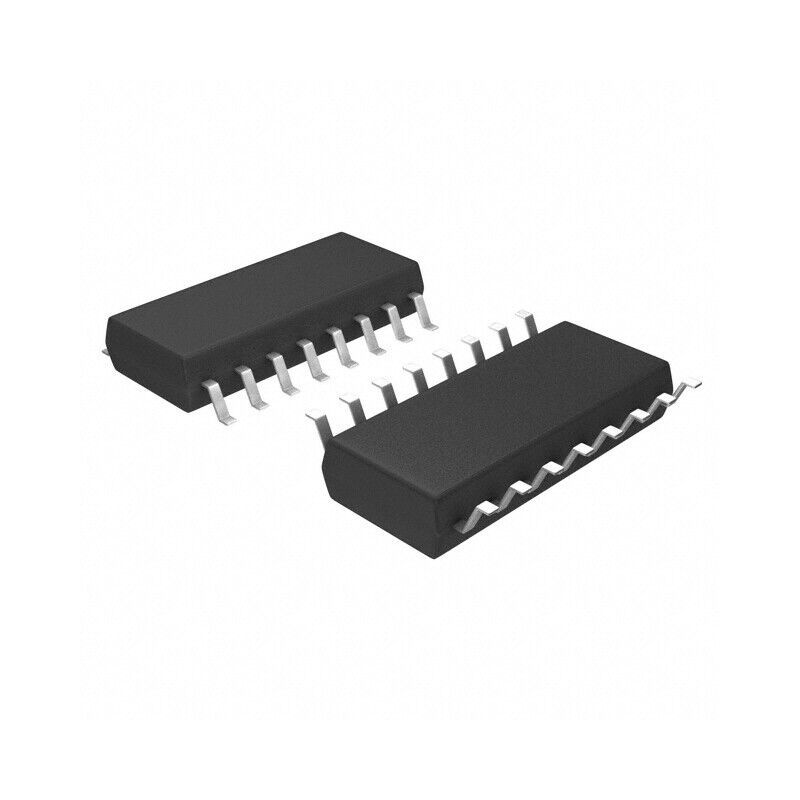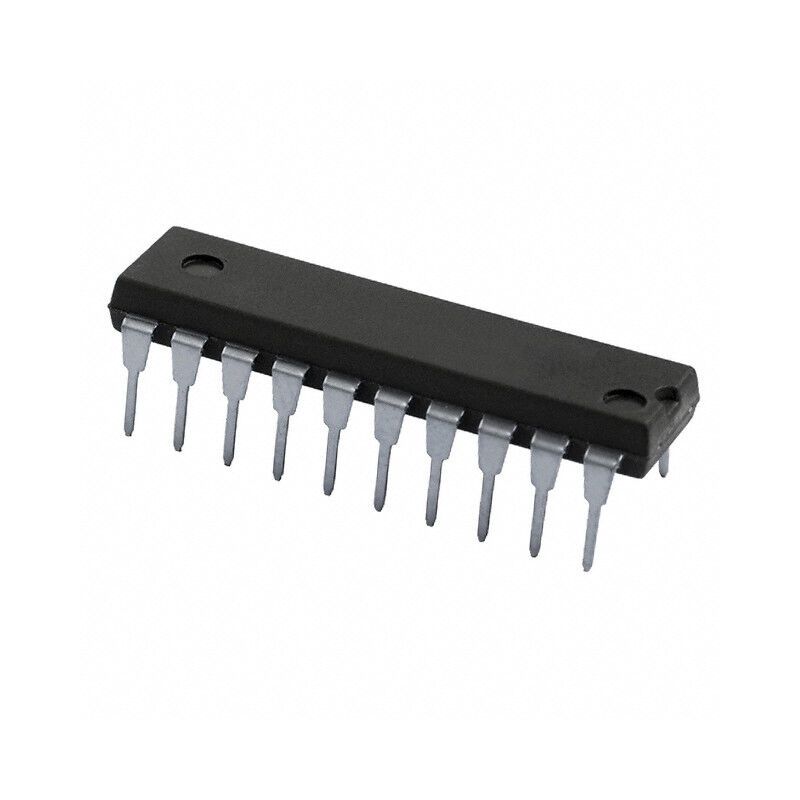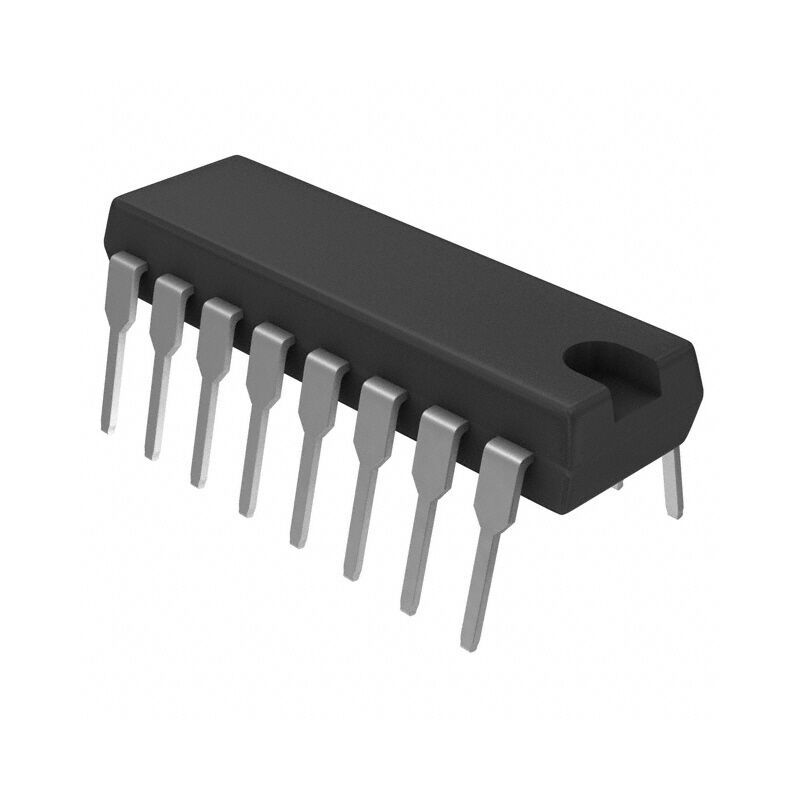


CD4047BE CMOS Monostable/Astable Multivibrator IC DIP-14
25 people are viewing this right now
In Stock
SKU
191702902151
£3.99
Safe Checkout, Guaranteed

Safe Checkout, Guaranteed
| Product Name | CD4047BE CMOS Monostable/Astable Multivibrator IC DIP-14 |
|---|---|
| SKU | 191702902151 |
| Price | £3.99 |
| CD4047BE CMOS Monostable/Astable Multivibrator IC DIP-14 Color | As per image |
| Category | Integrated Circuits |
| Brand | Nikko Electronics ltd |
| Product Code | 191702902151 |
| Availability | Yes |
Shipping cost is based on order value. Just add products to your cart and use the Shipping Calculator to see the shipping price. We want you to be 100% satisfied with your purchase. Items can be returned or exchanged within 30 days of delivery.
Precise control over timing characteristics of the CD4047BE CMOS Monostable/Astable Multivibrator IC DIP-14 is primarily achieved through the selection of external resistor (R_EXT) and capacitor (C_EXT) components connected to pins 1, 2, and 3. In monostable mode, the output pulse width (t_w) is determined by the formula t_w ≈ 2.48 * R_EXT * C_EXT. For astable mode, the oscillation frequency (f) is approximately f ≈ 1 / (2.48 * R_EXT * C_EXT), with the period (T) being T ≈ 2.48 * R_EXT * C_EXT. To ensure accuracy, using high-precision, low-temperature coefficient components for R_EXT and C_EXT is crucial. The CD4047BE supports a wide range of R and C values, allowing for timing from microseconds to several hours, offering significant flexibility for various timing and pulse generation applications.
To configure the CD4047BE CMOS Monostable/Astable Multivibrator IC DIP-14, specific pin connections are required for each mode. For **astable operation**, pin 12 (ASTABLE) must be connected to VDD, and pin 4 (MONOSTABLE) should be grounded. The external timing resistor (R_EXT) connects between pin 2 (R_EXT) and pin 3 (C_EXT/R_EXT), while the external timing capacitor (C_EXT) connects between pin 1 (C_EXT) and pin 3. For **monostable operation**, pin 4 (MONOSTABLE) is connected to VDD, and pin 12 (ASTABLE) is grounded. R_EXT connects between pin 2 and pin 3, and C_EXT connects between pin 1 and pin 3, similar to astable mode. Additionally, a trigger input is applied to pin 5 (TRIGGER) or pin 6 (RETRIGGER) for positive or negative edge triggering, respectively. Proper decoupling capacitors (e.g., 0.1µF ceramic) should be placed near the VDD and VSS pins for stable operation of the CD4047BE.
The CD4047BE CMOS Monostable/Astable Multivibrator IC DIP-14 is designed for a broad power supply range, typically operating from 3V to 15V, and sometimes up to 18V, depending on the specific manufacturer's variant. This wide voltage compatibility makes it highly versatile for integration into various digital systems. A key advantage of the CD4047BE, owing to its CMOS technology, is its exceptionally low quiescent current draw. In standby or static conditions, the current consumption is typically in the nanoampere (nA) range, making it an excellent choice for battery-powered or other low-power consumption applications where extending battery life is critical. Even during active operation, the dynamic power consumption remains relatively low, scaling with frequency, solidifying its position as an energy-efficient timing solution.
The CD4047BE CMOS Monostable/Astable Multivibrator IC DIP-14 offers robust output drive capabilities characteristic of the CD4000 series. Its outputs (Q, Q-bar, and Oscillator Output) can typically source or sink currents up to a few milliamperes, usually around 4mA at VDD=5V and up to 10mA at VDD=10V. This is generally sufficient to drive other CMOS logic gates directly. When interfacing the CD4047BE with TTL or other logic families that require higher input currents or operate at different voltage levels, level shifters or buffers may be necessary. For driving inductive loads, LEDs, or relays, it is recommended to use an external transistor or a dedicated driver IC to avoid exceeding the CD4047BE's output current limits and ensure reliable operation. Always consult the datasheet for specific maximum ratings to prevent damage to the CD4047BE.
In its standard astable configuration, the CD4047BE CMOS Monostable/Astable Multivibrator IC DIP-14 generates complementary square wave outputs (Q and Q-bar) with an approximate 50% duty cycle. This is due to the symmetrical charging and discharging paths of the external capacitor through the timing resistor. While the core astable mode doesn't offer independent duty cycle adjustment through a single R/C network, the CD4047BE provides a specific 'quasi-square wave' output on pin 10 (OSC OUT) which is essentially the internal oscillator signal. By utilizing external components like diodes and separate resistors in the R/C timing network, it is possible to create asymmetrical charge/discharge paths for the capacitor, thereby achieving a non-50% duty cycle. However, for highly precise or widely variable duty cycles, combining the CD4047BE with additional external logic or a dedicated PWM controller might be more practical than relying solely on its internal architecture.
The CD4047BE CMOS Monostable/Astable Multivibrator IC DIP-14 offers flexible triggering options for its monostable operation. It features two primary trigger inputs: Pin 5 (TRIGGER) for positive-edge triggering and Pin 6 (RETRIGGER) for negative-edge triggering. For stable single-pulse generation, the trigger input typically requires a clean, noise-free pulse with sufficient amplitude to cross the CMOS input threshold. Pin 5 is edge-triggered, meaning a positive transition initiates the output pulse. Pin 6 is also edge-triggered, responding to a negative transition. The CD4047BE is retriggerable via Pin 6 (RETRIGGER), allowing the output pulse to be extended if a new trigger occurs before the current pulse completes. For non-retriggerable operation, Pin 6 should be tied to VDD. It's crucial to ensure trigger pulse widths are appropriate for the desired operation, typically wider than the internal gate delays but narrower than the desired output pulse to avoid unintended retriggering or instability.
The timing accuracy and stability of the CD4047BE CMOS Monostable/Astable Multivibrator IC DIP-14 are predominantly influenced by the external timing components, R_EXT and C_EXT. The tolerance and temperature coefficients of these components are critical; even small variations in their values can lead to significant deviations in pulse width or frequency. For high-precision applications, using metal film resistors and low-drift capacitors (e.g., polystyrene, polypropylene, or NPO ceramic) is highly recommended. Power supply voltage fluctuations can also introduce minor timing variations, although the CD4047BE exhibits good supply voltage rejection. Internal propagation delays and comparator thresholds within the IC contribute to a small, inherent timing jitter and temperature dependency, which are typically minimal but become more noticeable at very high frequencies or extremely precise applications. Careful PCB layout, minimizing stray capacitance, and proper power supply decoupling are also essential to maintain optimal performance and stability of the CD4047BE.