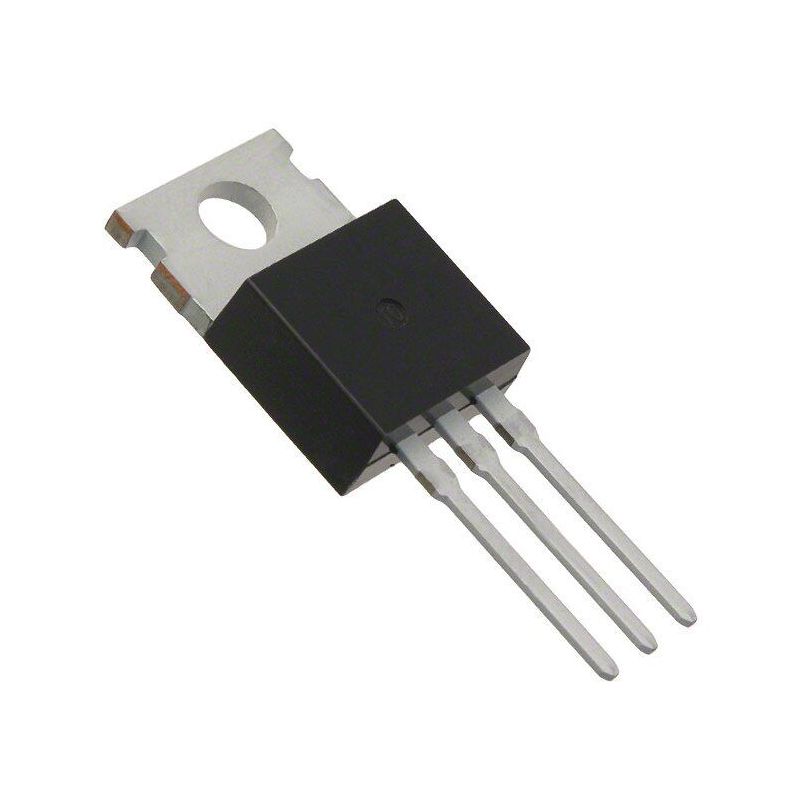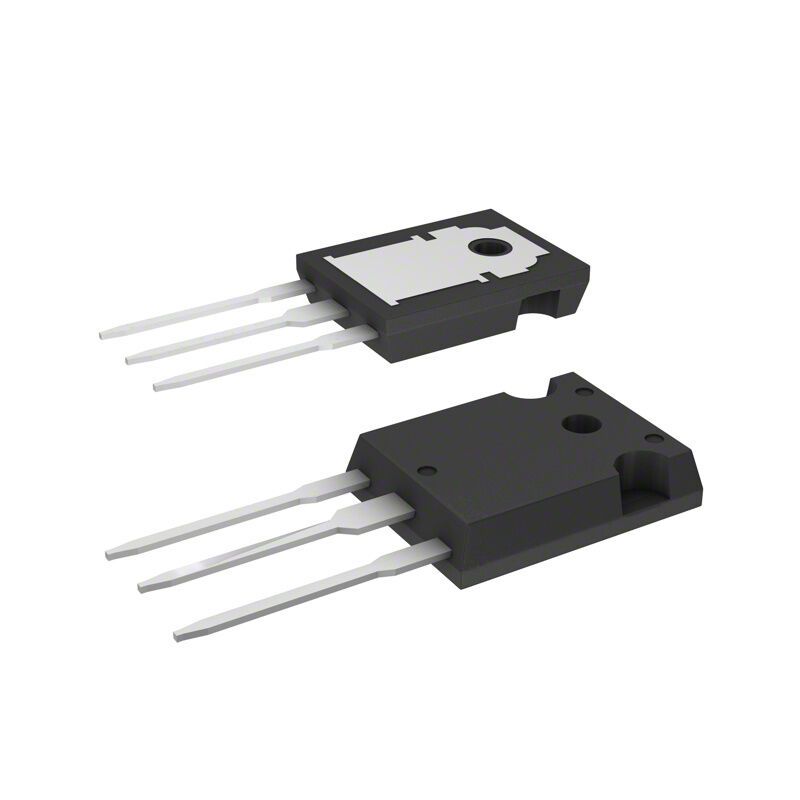


MJE305 NPN Power Transistor (TO-220)
26 people are viewing this right now
In Stock
SKU
191709550910
£4.75
Safe Checkout, Guaranteed

Safe Checkout, Guaranteed
The MJE305 is a robust and versatile NPN Bipolar Junction Transistor (BJT) housed in the widely popular TO-220 package. Designed for general-purpose amplification and switching applications, this transistor offers a compelling combination of performance, reliability, and ease of use. The TO-220 package facilitates easy mounting and excellent heat dissipation, making the MJE305 suitable for applications requiring moderate power handling. With its high collector-emitter voltage (VCEO) rating, substantial collector current (IC) capacity, and impressive power dissipation, this transistor is well-suited for a diverse range of circuits. The MJE305 finds common application in audio amplifiers, power supplies, motor control circuits, and relay drivers. Its linear characteristics and low saturation voltage make it an excellent choice for audio amplification stages, delivering clean and faithful signal reproduction.
In power supply circuits, the MJE305 can be employed as a switching element or as a linear regulator, providing stable and efficient voltage regulation. The TO-220 package allows for the attachment of a heatsink, enabling the transistor to handle even higher power levels. This transistor is a favorite among hobbyists, students, and professional engineers due to its versatility and availability. Its ease of use and readily available datasheets make it a valuable component in any electronics toolkit. Whether you're building an audio amplifier, designing a power supply, or controlling a motor, the MJE305 delivers the performance and reliability you need. This transistor is also suitable for use in educational settings, allowing students to learn about transistor characteristics and circuit design principles.
We source only the highest quality components, ensuring that you receive a product that meets or exceeds your expectations. Don't settle for inferior transistors that compromise performance and reliability. Upgrade to the MJE305 Transistor and experience the difference a premium-grade component can make. Invest in the best. Order your MJE305 Transistor today and elevate your next project to new heights of performance and efficiency. Build with confidence, knowing that you're using a component designed for a wide range of applications.
Its reputation for consistent performance makes it a reliable component for countless projects. Add it to your cart and start building!
| Product Name | MJE305 NPN Power Transistor (TO-220) |
|---|---|
| SKU | 191709550910 |
| Price | £4.75 |
| MJE305 NPN Power Transistor (TO-220) Color | As per image |
| Category | Transistors |
| Brand | Nikko Electronics ltd |
| Product Code | 191709550910 |
| Availability | Yes |
Shipping cost is based on order value. Just add products to your cart and use the Shipping Calculator to see the shipping price. We want you to be 100% satisfied with your purchase. Items can be returned or exchanged within 30 days of delivery.
The MJE305 NPN Power Transistor is engineered to handle significant power, but its reliability is strictly tied to effective heat dissipation. Since it is housed in a TO-220 package, the metal tab is electrically connected to the collector, providing a low-resistance thermal path. When your circuit demands high collector current, the power dissipated as heat (VCE x IC) can quickly exceed the transistor's ambient air limits. To prevent catastrophic thermal runaway, the MJE305 NPN Power Transistor must be mounted to a properly sized aluminum heatsink using high-quality thermal grease or a phase-change interface material. If your design requires the heatsink to be grounded, you must use a mica insulator or a silicone pad to isolate the collector tab. Engineers should carefully calculate the total thermal resistance from junction to ambient (RthJA) to ensure the junction temperature remains well below the 150°C maximum. In industrial environments with high ambient temperatures, derating the power capacity of the MJE305 NPN Power Transistor is a standard best practice to ensure a long operational lifespan.
Yes, the MJE305 NPN Power Transistor is frequently utilized in the output stages of audio power amplifiers due to its excellent linearity and robust current handling capabilities. In a typical Class AB amplifier design, the MJE305 NPN Power Transistor serves as the NPN half of a complementary push-pull pair. Its ability to maintain a relatively stable current gain (hFE) across a wide range of collector currents helps minimize total harmonic distortion (THD), ensuring clear and accurate sound reproduction. When designing audio circuits, it is important to match the hFE of the MJE305 NPN Power Transistor with its PNP counterpart to maintain symmetry in the output waveform, which prevents crossover distortion. Additionally, because audio transients can cause rapid spikes in power dissipation, the TO-220 package's ability to quickly transfer heat to a sink is vital for maintaining signal stability. For high-fidelity applications, designers often use the MJE305 NPN Power Transistor in parallel configurations to increase current capacity and reduce the output impedance of the amplifier stage.
In switching applications, such as relay drivers or DC motor controllers, the collector-emitter saturation voltage (VCE(sat)) of the MJE305 NPN Power Transistor is a critical specification. VCE(sat) represents the voltage drop across the transistor when it is fully turned 'on.' For the MJE305 NPN Power Transistor, a low saturation voltage is beneficial because it minimizes the power lost as heat during the conduction phase, thereby increasing overall system efficiency. To achieve the lowest possible VCE(sat), the base current must be sufficient to drive the transistor into deep saturation, typically following a forced gain ratio (IC/IB) specified in the datasheet. If the MJE305 NPN Power Transistor is not driven with enough base current, it may operate in the linear region even when intended to be a switch, leading to excessive heating and potential failure. When using this transistor to switch inductive loads like solenoids, always remember to include a flyback diode to protect the MJE305 NPN Power Transistor from high-voltage back-EMF spikes that occur when the current is abruptly cut off.
The Safe Operating Area (SOA) is perhaps the most critical boundary for any engineer using the MJE305 NPN Power Transistor in power-dense designs. The SOA curve defines the simultaneous limits of collector-emitter voltage (VCE) and collector current (IC) that the transistor can handle without undergoing secondary breakdown. For the MJE305 NPN Power Transistor, you cannot simply operate at the maximum rated voltage and maximum rated current simultaneously; as the voltage increases, the allowable current decreases significantly to keep the internal power dissipation within safe limits. When driving capacitive or inductive loads, the load line of the MJE305 NPN Power Transistor may shift, potentially crossing outside the SOA during switching transitions. This is a common cause of field failures in motor control or switching power supplies. By strictly adhering to the SOA graph provided in the technical documentation and incorporating protective circuitry like snubbers or current limiters, you ensure that the MJE305 NPN Power Transistor operates reliably even under transient stress conditions.
For balanced circuit designs, particularly in push-pull power amplifiers and motor H-bridge circuits, the MJE305 NPN Power Transistor is typically paired with the MJE2955 (or similar MJE-series PNP transistors). Using a complementary pair allows for the efficient handling of both halves of an AC signal or the reversible control of DC loads. When selecting a PNP complement for the MJE305 NPN Power Transistor, it is essential to ensure that the voltage ratings, current capacity, and gain characteristics are closely matched. This matching is vital for maintaining DC offset stability and minimizing distortion in linear applications. In many professional power supply designs, the MJE305 NPN Power Transistor handles the positive regulation or sourcing, while its PNP counterpart handles the negative rail or sinking. Because both devices often share the same thermal environment, mounting the MJE305 NPN Power Transistor and its complement on the same heatsink helps maintain thermal equilibrium, ensuring that any temperature-induced changes in VBE (base-emitter voltage) or gain occur symmetrically across both halves of the circuit.
The MJE305 NPN Power Transistor is primarily categorized as a general-purpose power transistor, meaning it excels in low-to-medium frequency applications. While it is highly effective for Pulse Width Modulation (PWM) in motor control, its transition frequency (fT) and switching times (rise, fall, storage, and delay times) limit its use in high-frequency switching power supplies. For most DC motor applications, a PWM frequency between 1kHz and 10kHz is ideal for the MJE305 NPN Power Transistor. If the frequency is too high, the transistor spends a significant portion of its cycle in the transition state between 'off' and 'on,' where power dissipation is at its peak. This can lead to overheating even if the load current is within limits. When implementing the MJE305 NPN Power Transistor in a PWM circuit, using a robust gate driver or a high-current logic buffer can help charge and discharge the base capacitance more quickly, effectively sharpening the switching edges and improving the thermal performance of the MJE305 NPN Power Transistor.
Driving the MJE305 NPN Power Transistor directly from a microcontroller (like an Arduino or PIC) requires a base current-limiting resistor to protect the MCU's I/O pin and ensure the transistor saturates correctly. To calculate the resistor value, first determine your load's required collector current (IC). Check the MJE305 NPN Power Transistor datasheet for the minimum current gain (hFE) at that IC, though for switching, it is safer to use a 'forced gain' of 10 to 20. Calculate the required base current (IB = IC / forced gain). Next, identify the MCU's output voltage (usually 3.3V or 5V) and subtract the base-emitter forward voltage (VBE) of the MJE305 NPN Power Transistor, which is typically around 0.7V to 1.2V. The formula is R = (V_out - VBE) / IB. For example, if you need 2A of current and use a forced gain of 20, you need 100mA of base current. If your MCU can't provide 100mA (most can't), you should use a small signal transistor (like a 2N2222) in a Darlington configuration with the MJE305 NPN Power Transistor to achieve the necessary drive current.