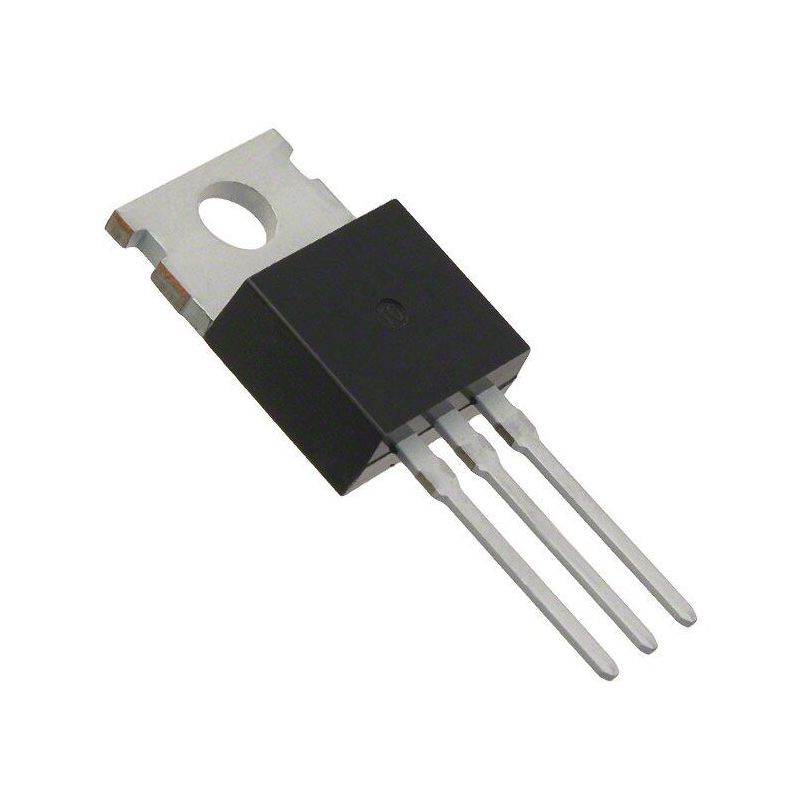


TLC5620CN Dual 8-bit DAC
38 people are viewing this right now
In Stock
SKU
191887117934
£9.45
Safe Checkout, Guaranteed

Safe Checkout, Guaranteed
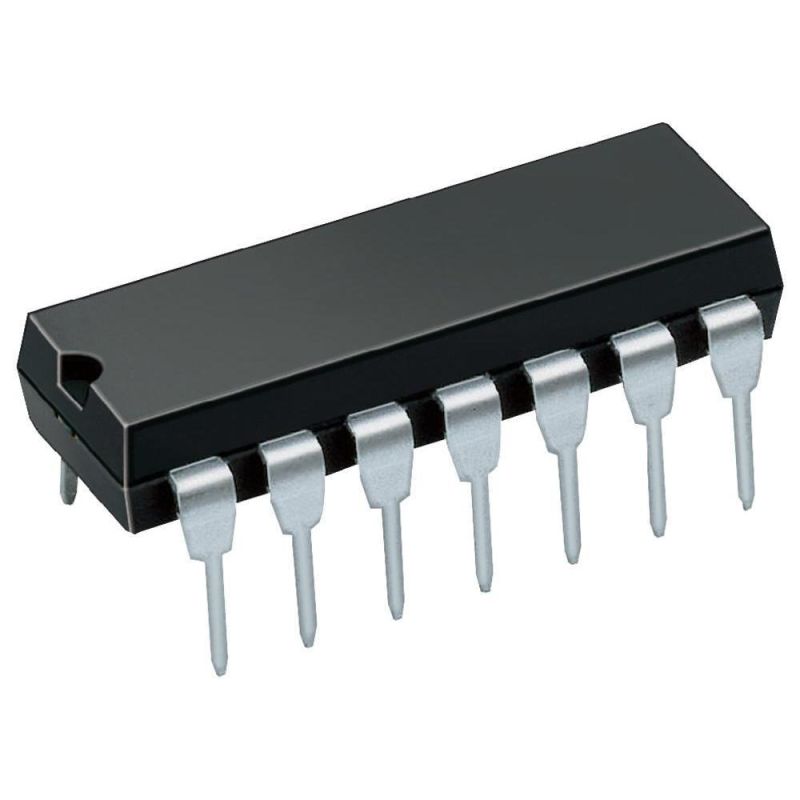
The TLC5620CN is a dual, 8-bit digital-to-analog converter (DAC) manufactured by Texas Instruments. Housed in a DIP-14 (Dual In-Line Package with 14 pins), this integrated circuit offers a simple and cost-effective solution for converting digital data into analog voltage signals. Its primary applications include industrial process control, data acquisition systems, and audio signal generation. The TLC5620CN's key features include its low power consumption, fast settling time, and monotonic output. Each DAC channel can independently convert an 8-bit digital input value into a corresponding analog output voltage. The output voltage range is determined by the reference voltage applied to the device.
The DIP-14 package facilitates easy integration into breadboards, perf boards, and printed circuit boards (PCBs), making it ideal for both prototyping and production applications. The TLC5620CN uses a serial interface to receive digital data, minimizing the number of pins required and simplifying circuit design. It also features a power-down mode, which reduces power consumption when the DAC is not in use. The monotonic output ensures that the output voltage increases or decreases consistently with the digital input value, preventing unwanted glitches or oscillations. Consider the TLC5620CN for generating control voltages in industrial automation equipment. You can use it to control the speed of motors, the position of actuators, or the intensity of lights.
Additionally, the TLC5620CN can generate audio signals for testing purposes or for simple audio playback applications. You can use it to generate sine waves, square waves, or other waveforms. Its fast settling time ensures that the output voltage quickly reaches the desired value, minimizing delays in control systems. It also features excellent linearity, ensuring accurate conversion of digital data to analog voltage. The TLC5620CN's reliable performance and ease of use make it a valuable addition to any electronics enthusiast's or engineer's toolkit. It's a versatile and cost-effective solution for a wide range of applications.
Enhance your analog signal generation capabilities with the TLC5620CN today. Don't miss this opportunity to add a reliable and versatile DAC to your collection. Click 'Add to Cart' now and start building your own analog control systems and signal generators!
| Product Name | TLC5620CN Dual 8-bit DAC |
|---|---|
| SKU | 191887117934 |
| Price | £9.45 |
| TLC5620CN Dual 8-bit DAC Color | As per image |
| Category | Integrated Circuits |
| Brand | Nikko Electronics ltd |
| Product Code | 191887117934 |
| Availability | Yes |
Shipping cost is based on order value. Just add products to your cart and use the Shipping Calculator to see the shipping price. We want you to be 100% satisfied with your purchase. Items can be returned or exchanged within 30 days of delivery.
The output voltage range of the TLC5620CN Dual 8-bit DAC is directly determined by the reference voltage applied to the device, typically through the VREF pin. This DAC operates on a unipolar basis, meaning its output voltage spans from 0V to the applied reference voltage (VREF). For instance, if a 2.5V reference is supplied, the full-scale output will be 2.5V. Each of the 256 possible digital input codes (0 to 255 for 8-bit) corresponds to a precise analog output step, with the smallest step being VREF / 256. Users can select an external precision voltage reference source to achieve the desired maximum output voltage and overall accuracy. Careful selection of the reference voltage is crucial for optimizing the resolution and dynamic range of the TLC5620CN Dual 8-bit DAC in your specific application, such as industrial process control or data acquisition systems, ensuring stable and accurate analog signal generation.
The TLC5620CN Dual 8-bit DAC employs a simple 3-wire serial interface for digital data input, which is a common and efficient method for integrated circuits in a DIP-14 package. This interface typically consists of a Data Input (DIN), Clock (CLK), and Chip Select (CS) line. Digital data, representing the desired analog output voltage, is shifted into the DAC serially, bit by bit, synchronized by the clock signal. The Chip Select line enables or disables data transfer, allowing multiple serial devices to share the same bus. This serial communication protocol simplifies integration with microcontrollers and digital signal processors, reducing the number of required I/O pins compared to a parallel interface. This makes the TLC5620CN Dual 8-bit DAC particularly suitable for compact designs in applications like embedded systems and portable instrumentation where pin count is a consideration.
Yes, the two 8-bit DAC channels within the TLC5620CN Dual 8-bit DAC can be controlled and updated independently, though typically through a shared serial interface. While the data for both channels is often loaded sequentially via the same DIN and CLK lines, the device architecture allows for individual channel selection or simultaneous update commands. This flexibility is critical for applications requiring distinct analog outputs for different processes, such as generating two separate control voltages in an industrial system or creating stereo audio signals. The independent operation ensures that changes to one analog output do not directly interfere with the other, providing robust and flexible control. This makes the TLC5620CN Dual 8-bit DAC a versatile component for dual-channel data acquisition and signal generation tasks where precise, isolated analog control is paramount.
The fast settling time of the TLC5620CN Dual 8-bit DAC is a significant advantage in dynamic applications where rapid changes in the analog output are required without introducing errors or delays. Settling time refers to the time it takes for the DAC's output to stabilize within a specified error band after a change in the digital input. For the TLC5620CN Dual 8-bit DAC, a fast settling time means it can quickly respond to new digital commands, making it ideal for high-speed data acquisition systems, waveform generation, and real-time industrial process control. This feature minimizes latency and maximizes throughput, allowing for more frequent updates and precise control over rapidly changing analog parameters. In audio applications, fast settling time helps ensure accurate reproduction of complex waveforms, preventing distortion and maintaining signal fidelity, thereby enhancing the overall performance of the system.
The monotonic output feature of the TLC5620CN Dual 8-bit DAC is crucial for maintaining signal integrity, especially in sensitive control systems. Monotonicity guarantees that as the digital input code increases, the analog output voltage either stays the same or increases, and never decreases. Conversely, as the digital input decreases, the analog output never increases. This characteristic prevents 'missing codes' or 'glitches' where the output might momentarily move in the wrong direction during a digital code transition. In closed-loop control systems, non-monotonic behavior can lead to instability, oscillations, or inaccurate control responses, potentially causing system failure or poor performance. The monotonic output of the TLC5620CN Dual 8-bit DAC ensures smooth, predictable, and reliable analog voltage changes, making it a dependable choice for precision industrial process control and data acquisition applications where consistent and accurate signal generation is paramount.
The TLC5620CN Dual 8-bit DAC is designed for single-supply operation, which simplifies power supply design and reduces overall system cost. Typically, it operates from a single positive voltage supply, commonly in the +5V range. The exact operating voltage range can be found in the device's datasheet, but its low power consumption characteristic, as highlighted in the product description, makes it efficient for various applications. While the primary power supply (VCC) powers the internal digital and analog circuitry, separate considerations for the analog reference voltage (VREF) are necessary to define the output range. Ensuring a stable, clean power supply is critical for achieving optimal performance, minimizing noise, and maintaining the accuracy of the analog output from the TLC5620CN Dual 8-bit DAC in sensitive data acquisition and audio signal generation systems.
When designing the analog output stage for the TLC5620CN Dual 8-bit DAC, several factors are crucial to optimize performance and ensure signal integrity. Firstly, buffering the DAC output with a low-offset, low-noise operational amplifier is highly recommended. DACs typically have a certain output impedance and limited current drive capability, and an op-amp buffer can provide a low output impedance, higher current drive, and isolate the DAC from varying loads. Secondly, filtering may be necessary to smooth the step-wise analog output into a continuous waveform, especially in audio or waveform generation applications, using a simple RC filter or a more complex active filter. Lastly, careful PCB layout practices, such as proper grounding (star ground or ground plane), decoupling capacitors near the power pins, and routing analog and digital traces separately, are essential to minimize noise coupling and maximize the accuracy and stability of the TLC5620CN Dual 8-bit DAC's output.