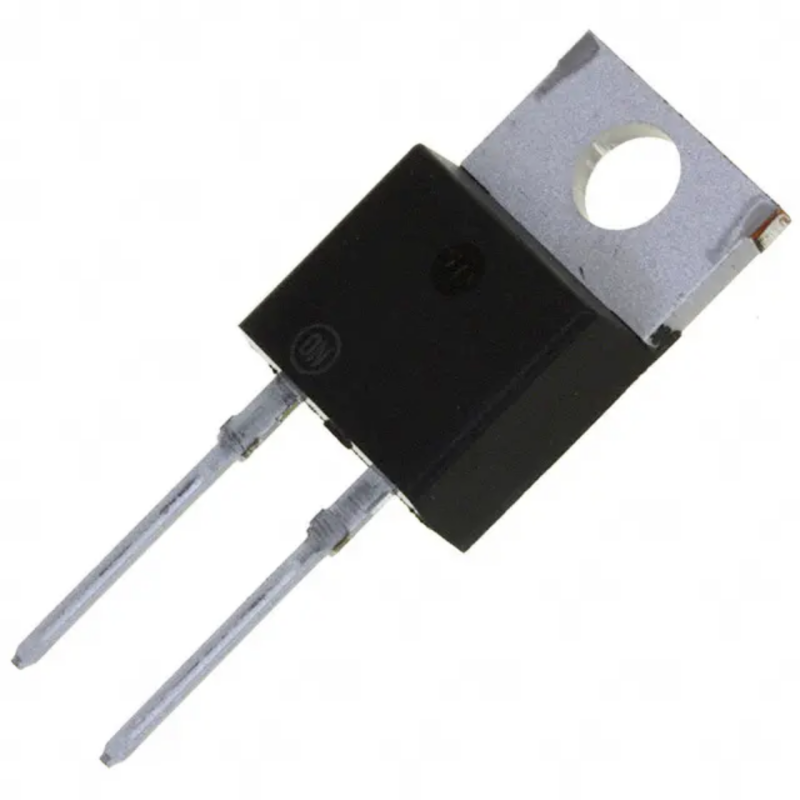


Motorola XC68HC705P9P 8-Bit Microcontroller (MCU) DIP-28
24 people are viewing this right now
In Stock
SKU
191736261543
£17.99
Safe Checkout, Guaranteed

Safe Checkout, Guaranteed
The XC68HC705P9P Integrated Circuit is a highly versatile and robust 8-bit microcontroller from the Motorola 68HC05 family, designed for a wide range of embedded control applications. Encapsulated in a through-hole DIP-28 (Dual In-line Package), this microcontroller offers ease of use and is an excellent choice for both prototyping and production environments, especially in legacy systems or projects requiring a well-understood architecture. Featuring a comprehensive set of on-chip peripherals, including timers, I/O ports, and an analog-to-digital converter (ADC), the XC68HC705P9P provides the flexibility to handle various control and data acquisition tasks. Its on-chip EEPROM memory allows for non-volatile storage of data and program code, enabling persistent configuration and data logging capabilities. The DIP-28 package facilitates easy insertion into breadboards and prototyping boards, making it ideal for experimentation and development, while also being suitable for production PCBs. Its through-hole design ensures secure and reliable connection to PCBs.
The XC68HC705P9P microcontroller is based on the Motorola 68HC05 CPU core, a widely recognized and well-documented architecture. Its instruction set is relatively simple to learn, making it accessible to both novice and experienced developers. The integrated timers can be used for generating PWM signals, controlling motor speeds, and implementing real-time control algorithms. The I/O ports provide versatile interfaces for connecting sensors, actuators, and other external devices. The on-chip ADC allows for direct measurement of analog signals, eliminating the need for external ADC circuits in many applications. This microcontroller is commonly used in applications such as industrial control, automotive electronics, and consumer appliances.
Its ease of use, robust feature set, and proven reliability make it an ideal choice for controlling electromechanical systems, managing sensor data, and implementing communication protocols. The on-chip EEPROM memory allows for easy firmware updates and customization, enabling manufacturers to adapt their products to changing requirements. The XC68HC705P9P microcontroller is designed with stringent quality control standards, ensuring consistent performance and long-term reliability. Its robust design and optimized architecture make it a dependable choice for demanding applications. Upgrade your embedded control systems or maintain legacy systems with the XC68HC705P9P Integrated Circuit, and experience the superior performance, versatility, and ease of use that this microcontroller provides. Its comprehensive feature set, low power consumption, and proven architecture make it an ideal choice for a wide range of applications.
Order yours today and take your electronic projects to the next level. Get reliable control. Buy the XC68HC705P9P IC now!
| Product Name | Motorola XC68HC705P9P 8-Bit Microcontroller (MCU) DIP-28 |
|---|---|
| SKU | 191736261543 |
| Price | £17.99 |
| Motorola XC68HC705P9P 8-Bit Microcontroller (MCU) DIP-28 Color | As per image |
| Category | Integrated Circuits |
| Brand | Nikko Electronics ltd |
| Product Code | 191736261543 |
| Availability | Yes |
Shipping cost is based on order value. Just add products to your cart and use the Shipping Calculator to see the shipping price. We want you to be 100% satisfied with your purchase. Items can be returned or exchanged within 30 days of delivery.
The Motorola XC68HC705P9P 8-Bit Microcontroller (MCU) DIP-28 is a member of the HC05 family featuring internal EPROM, which requires specific hardware protocols for successful flashing. For developers or maintenance engineers looking to program this unit, it is essential to provide a high-voltage programming supply (Vpp), typically around 13.0V, to the IRQ/Vpp pin. Because the 'P' suffix in the part number indicates a plastic DIP-28 package, these units are generally One-Time Programmable (OTP) rather than UV-erasable. When integrating the Motorola XC68HC705P9P 8-Bit Microcontroller (MCU) DIP-28 into a production workflow, you must ensure your universal programmer supports the specific algorithm for the P9 variant, as the memory map and security bit locations differ from other 705 models. It is highly recommended to use a dedicated socketed programmer like a Xeltek SuperPro or a vintage Motorola M68HC05EVS system to ensure timing parameters for the EPROM burn are met accurately, preventing bit-rot or incomplete programming cycles in critical control applications.
The Motorola XC68HC705P9P 8-Bit Microcontroller (MCU) DIP-28 features a sophisticated on-chip 8-bit ADC, which is a core requirement for industrial data acquisition and sensor interfacing. This converter utilizes a 4-channel multiplexed input system, allowing the Motorola XC68HC705P9P 8-Bit Microcontroller (MCU) DIP-28 to monitor multiple analog signals sequentially. The ADC operates using a successive approximation technique, providing a balance between conversion speed and power consumption. For high-precision applications, engineers must pay close attention to the VrefH and VrefL pins to ensure a stable reference voltage, as any noise on these lines will directly impact the quantization accuracy of the 8-bit result. In many legacy designs, the Motorola XC68HC705P9P 8-Bit Microcontroller (MCU) DIP-28 is used to monitor temperature sensors or battery levels, where the conversion process is triggered by software through the ADC Status and Control Register (ADSCR). Understanding the internal clock scaling for the ADC is vital to ensure that the conversion frequency stays within the specified limits for the internal sample-and-hold circuitry.
The Motorola XC68HC705P9P 8-Bit Microcontroller (MCU) DIP-28 is the EPROM-based equivalent of the mask-ROM MC68HC05P9, making it an ideal choice for prototyping or replacing discontinued ROM-coded parts. While the pinout of the Motorola XC68HC705P9P 8-Bit Microcontroller (MCU) DIP-28 is identical to its ROM counterpart in the DIP-28 footprint, there are critical internal differences regarding the programming voltage pins and the bootloader mode. In a standard application circuit, the Motorola XC68HC705P9P 8-Bit Microcontroller (MCU) DIP-28 will function seamlessly provided the firmware has been correctly mirrored from the original ROM code and the vector table is aligned with the P9 memory map. However, users should verify the 'XC' prefix, which sometimes denotes pre-production or specific temperature-graded silicon. For long-term reliability in industrial environments, confirming that the timing characteristics of the Motorola XC68HC705P9P 8-Bit Microcontroller (MCU) DIP-28 match the original system's crystal frequency is necessary, as the HC05 architecture is highly dependent on the internal bus clock (E-clock) for I/O synchronization and timer accuracy.
Clocking the Motorola XC68HC705P9P 8-Bit Microcontroller (MCU) DIP-28 requires an external resonant circuit connected to the OSC1 and OSC2 pins. The internal oscillator circuitry is designed to work with a standard quartz crystal or a ceramic resonator. For most industrial applications, a 4.0 MHz crystal is used to achieve a 2.0 MHz internal bus speed, as the Motorola XC68HC705P9P 8-Bit Microcontroller (MCU) DIP-28 utilizes an internal divide-by-two circuit. It is crucial to select appropriate load capacitors (typically 15pF to 22pF) based on the crystal manufacturer's specifications to prevent frequency drift or startup failures. In high-noise environments, placing the crystal as close as possible to the Motorola XC68HC705P9P 8-Bit Microcontroller (MCU) DIP-28 pins is a best practice to minimize EMI susceptibility. If the system uses an external clock source instead of a crystal, the signal should be applied to OSC1 while leaving OSC2 unconnected. Proper clock management ensures that the 16-bit timer system and the Serial Communications Interface (SCI) within the Motorola XC68HC705P9P 8-Bit Microcontroller (MCU) DIP-28 maintain accurate baud rates and period measurements.
The Motorola XC68HC705P9P 8-Bit Microcontroller (MCU) DIP-28 operates on a standard 5V nominal supply, typically ranging from 4.5V to 5.5V. To ensure the integrity of the 8-bit CPU operations and the sensitive analog peripherals like the ADC, robust decoupling is mandatory. A 0.1µF ceramic capacitor should be placed immediately adjacent to the VDD and VSS pins of the Motorola XC68HC705P9P 8-Bit Microcontroller (MCU) DIP-28 to filter out high-frequency switching noise. In environments where the Motorola XC68HC705P9P 8-Bit Microcontroller (MCU) DIP-28 is controlling inductive loads or relays, additional bulk capacitance (such as a 10µF tantalum capacitor) on the power rail is recommended to prevent voltage dips during current surges. Furthermore, the RESET pin should be pulled high with an appropriate RC network or a dedicated supervisor IC to ensure a clean start-up sequence. Since the Motorola XC68HC705P9P 8-Bit Microcontroller (MCU) DIP-28 is a legacy CMOS device, avoiding floating input pins on Port A, Port B, or Port C is essential to minimize unnecessary current consumption and prevent potential latch-up conditions.
The Motorola XC68HC705P9P 8-Bit Microcontroller (MCU) DIP-28 includes two primary low-power operating modes: WAIT and STOP. These modes are essential for applications where the Motorola XC68HC705P9P 8-Bit Microcontroller (MCU) DIP-28 must remain idle for long periods, such as in battery-powered handheld diagnostic tools. In WAIT mode, the CPU clock is halted but the internal oscillator and peripherals like the timer and ADC remain active, allowing for a fast wake-up via an interrupt. In STOP mode, the entire oscillator is shut down, reducing the current draw of the Motorola XC68HC705P9P 8-Bit Microcontroller (MCU) DIP-28 to its absolute minimum (typically in the microampere range). Recovery from STOP mode requires a hardware reset or an external interrupt on the IRQ pin. When designing with the Motorola XC68HC705P9P 8-Bit Microcontroller (MCU) DIP-28, it is important to configure the I/O ports correctly before entering these modes to ensure that external components do not draw excess current through the MCU's pins, thereby maximizing battery life and thermal efficiency.
The Motorola XC68HC705P9P 8-Bit Microcontroller (MCU) DIP-28 features a specific memory architecture that includes 2112 bytes of user EPROM and 128 bytes of on-chip RAM. The memory map is a critical reference for any developer working with the Motorola XC68HC705P9P 8-Bit Microcontroller (MCU) DIP-28, as it dictates the location of I/O registers, the stack pointer, and the interrupt vectors. The user EPROM is located at the upper end of the memory space, with the reset and interrupt vectors residing at the very top (addresses $1FF0-$1FFF). The 128 bytes of RAM are typically located in the first page (Page 0) to allow for efficient direct-addressing instructions, which are a hallmark of the 68HC05 instruction set. When compiling code for the Motorola XC68HC705P9P 8-Bit Microcontroller (MCU) DIP-28, the linker script must be precisely configured to ensure that constants and executable code are placed within the EPROM boundaries while variables are assigned to the RAM space. Failure to respect these boundaries will result in bus errors or unpredictable firmware behavior during execution.